
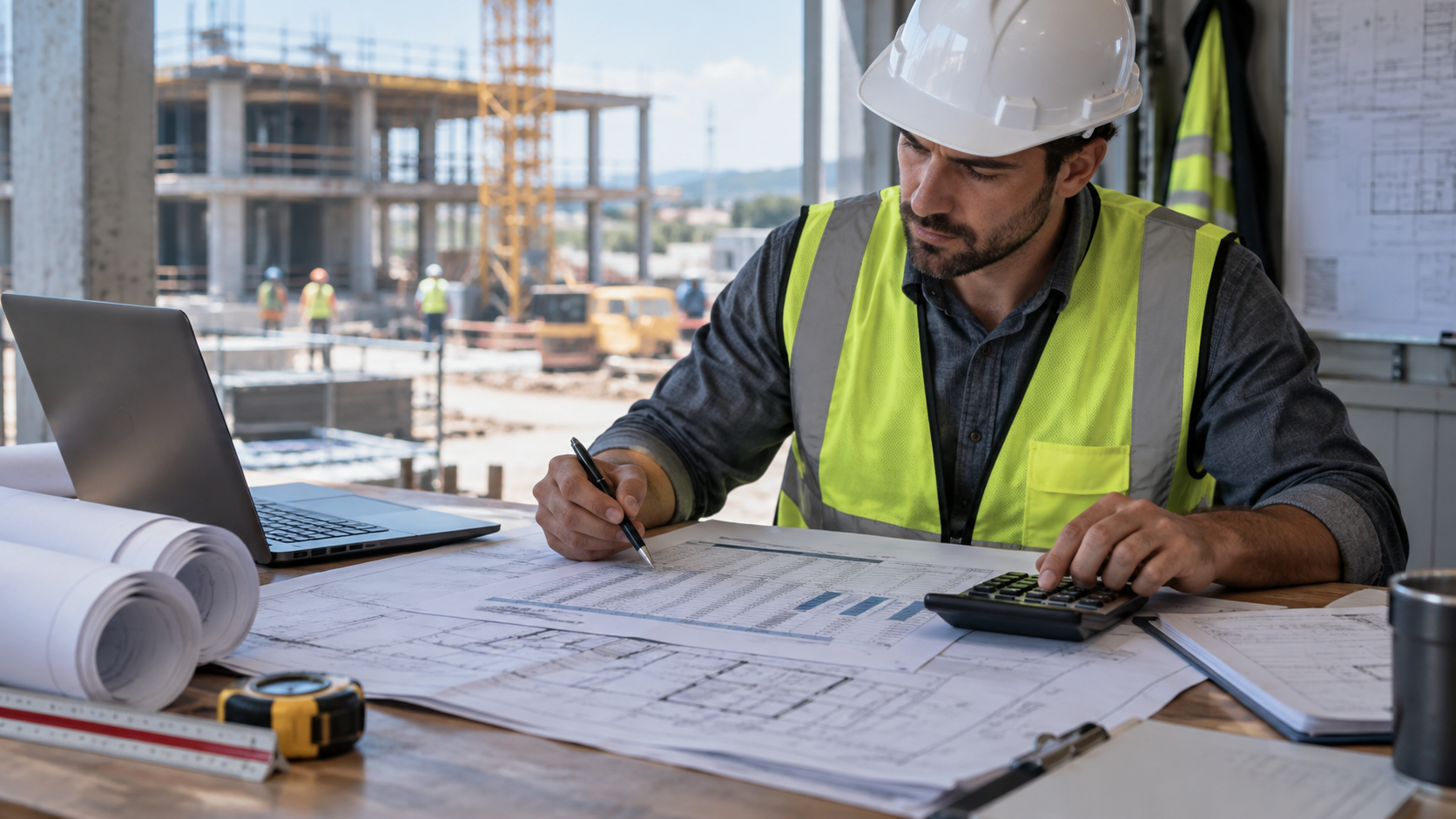
The budget for construction or a large-scale renovation includes many components — materials, labor, machinery, various expenses, and work volumes.
Even a seemingly detailed cost estimate may contain inaccuracies, inconsistent pricing, incorrect quantities, or items that do not correspond to the project.
That is why a professional review of the cost estimate before starting a major construction project can be an important stage of financial planning.
What Is a Cost Estimate Inspection?
During a cost estimate inspection, the submitted data is reviewed according to various parameters.
The cost of materials, labor, machinery, equipment, work volumes, and their relationship with the project documentation may be assessed.
The justification of various additional expenses may also be reviewed.
The purpose of this process is not simply to verify the total amount. More importantly, it helps determine what the total cost consists of and whether each individual item corresponds to the project and the technical information provided.
What Types of Discrepancies Can Be Identified?
Discrepancies in a cost estimate can appear in different forms.
For example:
- the volume of work differs from the volume specified in the project;
- the same work or material is included in several items;
- the cost of a particular resource requires additional justification;
- the estimate includes work that is not предусмотрено in the project;
- the technical data and financial information do not correspond.
Such a discrepancy does not always mean that an error has been made. In some cases, there may be an objective explanation. However, identifying and explaining these differences is an important part of budget control.
Who Can Benefit Most From This Type of Inspection?
A cost estimate inspection can be useful for a private client, a company, an investor, or another organization financing a construction project.
The larger the project, the more significant even a small percentage difference can become in financial terms.
Therefore, reviewing the data before the project begins allows the client to gain a clearer understanding of the planned expenses.
Why Does a Lower Price Not Always Mean a Better Offer?
When comparing construction proposals, attention is often focused mainly on the final price.
However, two estimates may appear to cover the same scope of work while actually including different materials, quantities, or lists of works.
For this reason, good practice is to assess not only the final amount but also the structure of the cost estimate.
Ultimately, a thoroughly reviewed cost estimate gives the client greater financial control both before the project begins and throughout the construction process.